
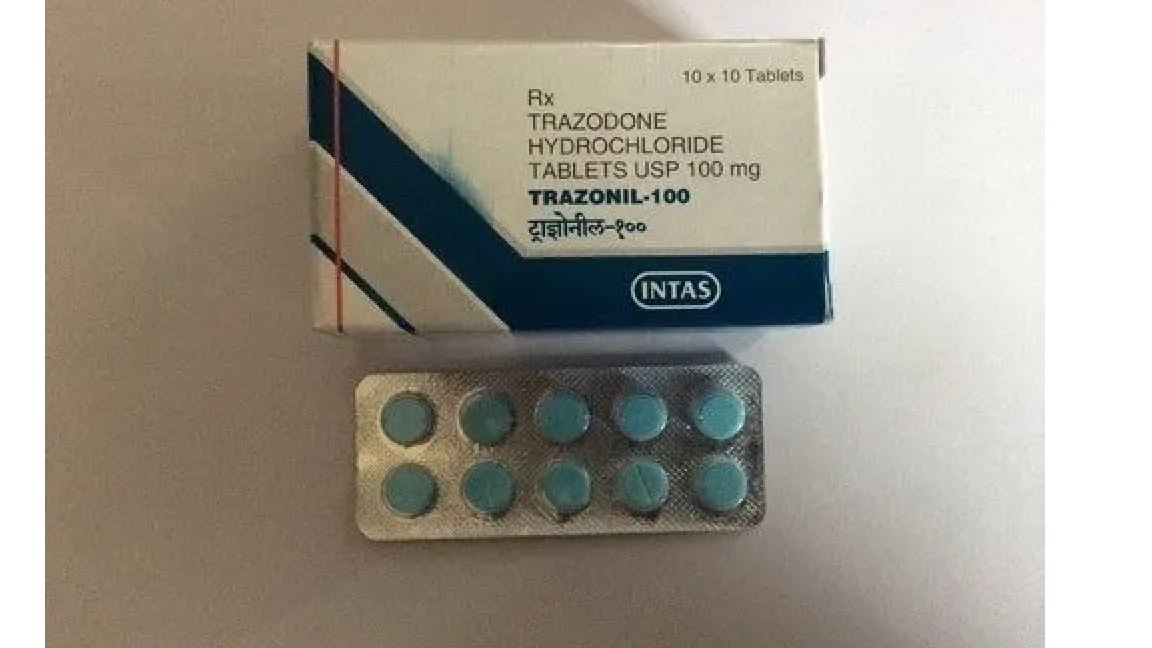

Trazodone 100mg — Comprehensive Guide, Medical Uses, Pharmacology & Safety
Trazodone 100mg is a widely prescribed antidepressant known for its unique dual action on serotonin pathways and its usefulness in treating major depressive disorder (MDD), anxiety, and sleep-related issues. Unlike many modern antidepressants such as SSRIs and SNRIs, trazodone belongs to a class known as Serotonin Antagonist and Reuptake Inhibitors (SARIs). This classification gives it a distinct pharmacological profile, especially in its ability to promote sleep and reduce anxiety alongside its antidepressant effects.
The 100mg strength is considered a mid-range to moderately high dosage form, frequently used either as an antidepressant or as part of a titration scheme as patients adjust to effective therapeutic levels. Additionally, because trazodone has sedative properties, it is sometimes used in lower divided doses to assist with insomnia, although such use must always be determined by a licensed clinician.
This article explores everything you need to know about Trazodone 100mg—from how it works, to its benefits, side effects, risks, interactions, and best practices for safe use. This content is strictly educational and not intended to promote availability or non-medical use.

2. Background and History
Trazodone was first developed in Italy in the 1960s by Angelini Laboratories. Researchers were seeking a medication that could treat depression without the heavy side effects associated with tricyclic antidepressants (TCAs), such as anticholinergic effects, weight gain, and cardiac complications.
Timeline Overview
-
1960s: Initial synthesis and early clinical studies
-
1970s: Introduced in the United States as an antidepressant
-
1980s–1990s: Became well-known for its sedative properties as well
-
2000s–Present: Widely used for depression, anxiety, insomnia, PTSD-related sleep issues, and chronic pain-related sleep disturbances
Today, trazodone remains one of the most commonly prescribed sleep-related medications in North America, despite not being originally developed as a hypnotic.
3. Chemical Classification & Pharmacology
3.1 Drug Class
Trazodone is classified as a Serotonin Antagonist and Reuptake Inhibitor (SARI).
This means it:
-
Blocks (antagonizes) certain serotonin receptors—specifically 5-HT2A and 5-HT2C
-
Inhibits the reuptake of serotonin, increasing its levels in the synaptic cleft
-
Has mild α-adrenergic blocking effects, contributing to sedation and hypotension
-
Exhibits histamine H1 antagonism, adding to its sleep-promoting qualities
These combined mechanisms make trazodone an atypical antidepressant compared to SSRIs, TCAs, or MAOIs.
3.2 Pharmacokinetics
-
Absorption: Rapid, peak plasma concentration within 1–2 hours
-
Bioavailability: 65–70% (oral)
-
Half-life: 6–8 hours (immediate-release), longer in extended-release forms
-
Metabolism: Primarily hepatic via CYP3A4
-
Excretion: Mostly renal
4. Clinical Uses of Trazodone 100mg
4.1 Major Depressive Disorder (Primary Indication)
Trazodone 100mg is often prescribed as part of the titration process for treating clinical depression. Some patients respond well to daily doses ranging from 150–300mg, often divided throughout the day or taken at bedtime to reduce daytime sedation.
The 100mg dose can be:
-
A maintenance dose for mild to moderate depression
-
A step-up dose for patients increasing from 50mg
-
Part of a multi-dose regimen used twice or three times per day
4.2 Anxiety Disorders
Trazodone also helps with anxiety symptoms due to its:
-
Sedative effects
-
Serotonin-modulating properties
-
Ability to reduce mental and physical tension and restlessness
Conditions where it may be used:
-
Generalized Anxiety Disorder (GAD)
-
PTSD-related anxiety
-
Panic disorder (as adjunct therapy)
-
Adjustment-related anxiety
4.3 Insomnia (Off-label but Common)
Trazodone is widely prescribed as a sleep aid. Though originally developed for depression, its unique antihistamine-like sedative effect makes it one of the most common non-controlled prescriptions for insomnia.
Benefits for sleep include:
-
Helps initiate sleep
-
Helps maintain sleep
-
Reduces nighttime awakenings
-
Useful in anxiety-related insomnia
-
Does not suppress REM sleep as strongly as benzodiazepines
4.4 Chronic Pain & Fibromyalgia (Adjunct)
Trazodone may help with:
-
Pain-related sleep disruption
-
Mood dysregulation caused by chronic pain
-
Central sensitization syndromes
4.5 Other Uses Under Medical Supervision
-
Alcohol withdrawal-related sleep disturbance
-
PTSD nightmares (sometimes in alternating therapy with prazosin)
-
Restless leg syndrome (in select cases)
-
Tinnitus-related sleep disturbance
5. Trazodone 100mg Effects
5.1 Therapeutic Effects
-
Improved mood
-
Decreased depressive thoughts
-
Reduced anxiety
-
Enhanced sleep quality
-
Less nighttime restlessness
-
Lower physical tension
-
Increased serotonin balance
-
Reduced early-morning waking
-
Stabilized emotional response
5.2 How Long Until Effects Are Felt?
-
Sedation: Often within 30–60 minutes
-
Sleep improvement: Within the first week
-
Mood improvement: 2–4 weeks
-
Anxiety reduction: 1–2 weeks
Antidepressants require time for serotonin receptor adaptation, explaining the delay in mood improvement.
6. Side Effects of Trazodone 100mg
Side effects vary depending on whether trazodone is used primarily as a sleep aid or antidepressant Trazodone 100mg.
6.1 Common Side Effects
-
Drowsiness
-
Dizziness
-
Dry mouth
-
Headache
-
Fatigue
-
Blurred vision
-
Lightheadedness Trazodone 100mg
-
Nausea
-
Constipation
-
Vivid dreams
Most side effects are mild and improve within the first couple of weeks.
6.2 Moderate Side Effects
-
Low blood pressure (orthostatic hypotension)
-
Confusion (in elderly patients)
-
Night sweats
-
Muscle aches
-
Abnormal taste sensations
6.3 Serious Side Effects (Rare)
-
Cardiac arrhythmias Trazodone 100mg
-
Serotonin syndrome
-
Severe hypotension
-
Prolonged erection (priapism)
-
Suicidal ideation in young adults (risk with most antidepressants)
6.4 Priapism Warning
One of the rare but well-known risks of trazodone is priapism, a prolonged and potentially damaging erection. Though extremely uncommon, it requires immediate emergency care.
7. Trazodone Interactions
Trazodone interacts with many medications due to its serotonergic and sedative effects.
7.1 Interactions to Avoid
7.1.1 Other Serotonergic Drugs
Combining can risk serotonin syndrome:
-
SSRIs
-
SNRIs
-
MAOIs (dangerous combination)
-
Tramadol
-
Linezolid
-
St. John’s wort Trazodone 100mg
7.1.2 CNS Depressants
Can increase sedation:
-
Alcohol
-
Benzodiazepines
-
Opioids
-
Sleep medications
7.1.3 Blood Thinners
-
May increase bleeding risk when combined with aspirin or warfarin
7.1.4 CYP3A4 Inhibitors
These can affect trazodone levels:
-
Certain antibiotics (clarithromycin) Trazodone 100mg
-
Antifungals (ketoconazole)
-
HIV medications
-
Grapefruit
8. Tolerance, Dependence & Withdrawal
Trazodone is not a controlled substance and has far lower risk of dependence than benzodiazepines or sedative hypnotics. However, sudden discontinuation after long-term use can cause mild withdrawal effects.
8.1 Possible Discontinuation Symptoms
-
Rebound insomnia
-
Anxiety
-
Irritability
-
Nausea
-
Headaches
A medically supervised taper is recommended after long-term daily use.
9. Special Populations
9.1 Elderly Patients
-
Increased risk of falls
-
Higher sensitivity to sedation
-
May require lower starting doses
9.2 Pregnant or Breastfeeding Individuals
-
Category C: potential risks exist
-
Not usually first choice during pregnancy
9.3 People with Heart Conditions
-
Caution due to possible arrhythmias
9.4 People with Liver or Kidney Issues
-
May require adjustments
10. Overdose Risks
Trazodone overdose is uncommon but possible, especially in combination with alcohol or sedatives.
Symptoms of overdose include:
-
Extreme drowsiness
-
Slow heart rate
-
Low blood pressure
-
Respiratory depression
-
Seizures
-
Cardiac abnormalities
Immediate medical attention is required.
11. Benefits vs. Risks Summary
Benefits
-
Effective for depression
-
Helps with anxiety
-
Useful for insomnia
-
Non-habit forming in most cases
-
Safer alternative to benzodiazepines for sleep
-
Inexpensive and widely available
Risks
-
Sedation
-
Orthostatic hypotension
-
Priapism (rare but serious)
-
Drug interactions
-
Possible withdrawal symptoms
12. Public Health, Misconceptions & Safety
There are several misconceptions surrounding Trazodone 100mg :
Myth 1: “It’s just a sleep pill.”
Trazodone is primarily an antidepressant, not a hypnotic, even though it is widely used for sleep.
Myth 2: “It is completely safe.”
Though safer than many sedatives, improper use or combining Trazodone 100mg with other CNS depressants can be dangerous.
Myth 3: “You can take as much as you need for sleep.”
Doses must be medically supervised because too much increases the risk of low blood pressure, fainting, and cardiac complications.
13. Conclusion
Trazodone 100mg is a versatile and clinically valuable medication used to treat major depressive disorder, anxiety, and insomnia. It works by modulating serotonin levels and blocking certain receptors, giving it a balanced effect that improves mood and promotes sleep.
However, trazodone is not without risks. It can cause sedation, dizziness, hypotension, and in extremely rare cases, priapism. Safe use requires medical supervision, awareness of interactions, and careful consideration in special populations.
Despite these precautions, trazodone remains an important part of modern mental health treatment—especially for individuals who need both mood support and improved sleep quality.
| Quantity | 90 |
|---|
Related products
Products
Products
Products

Products
Products

Products

Products

Products