
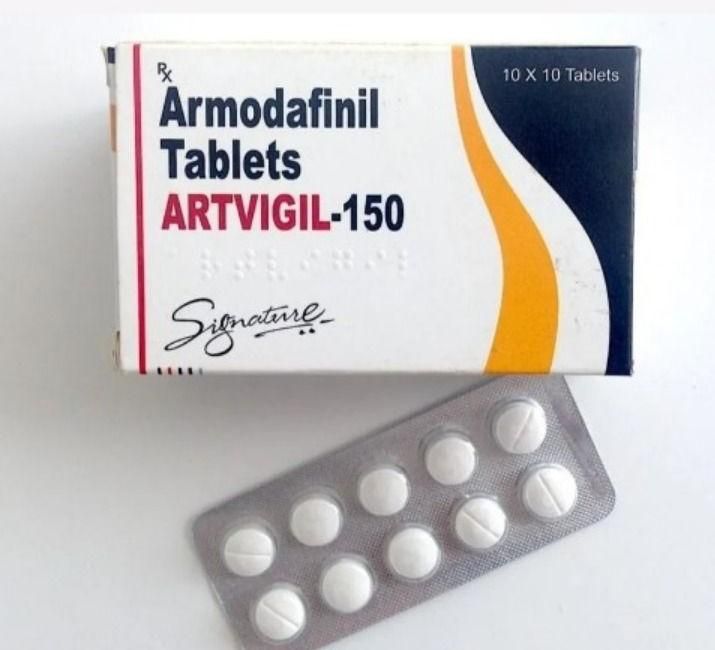

Armodafinil 150mg — Comprehensive Guide, Uses, Benefits, Side Effects, Dosage & Safety
Armodafinil 150mg is a prescription wakefulness-promoting medication used to treat excessive sleepiness caused by conditions such as narcolepsy, obstructive sleep apnea (OSA), and shift work sleep disorder (SWSD). Marketed under brand names like Nuvigil, it is a more refined version of modafinil, containing only the R-enantiomer, which is longer-lasting, more potent, and more stable in the body.
Unlike traditional stimulants such as amphetamines, armodafinil operates through mechanisms that increase wakefulness without producing extreme stimulation, making it one of the most widely used modern treatments for chronic fatigue and sleep disorders. However, because of its powerful neurological effects, it must be used responsibly and only as directed by a qualified healthcare professional.
This in-depth guide explores everything about Armodafinil 150mg, including how it works, what it’s used for, its benefits, dosing guidelines, pharmacology, side effects, risks, precautions, and long-term considerations.
What Is Armodafinil 150mg?
Armodafinil is a central nervous system (CNS) wakefulness-promoting agent. The 150mg dose is the most commonly prescribed strength and is typically taken once daily, depending on the condition being treated.
Unlike typical stimulants:
-
It has lower risk of dependence
-
It does not typically cause jitteriness or hyperactivity
-
It promotes stable, long-lasting wakefulness
-
It improves cognitive clarity and reduces fatigue
Brand Names
-
Nuvigil (primary brand)
-
Various generic versions labeled as Armodafinil 150 mg
How Armodafinil Works (Mechanism of Action)
The exact mechanism is not fully understood, but research shows it involves:
1. Dopamine Reuptake Inhibition
Armodafinil blocks the dopamine transporter (DAT), causing a controlled increase in dopamine levels. This contributes to improved:
-
Wakefulness
-
Motivation
-
Alertness
However, this dopamine elevation is milder and more stable compared to amphetamines.
2. Effects on Orexin (Hypocretin) Systems
Orexin regulates:
-
Wakefulness
-
Cognitive activity
-
Sleep-wake cycles
Armodafinil activates orexin neurons, leading to enhanced wakefulness.
3. Glutamate Activation & GABA Suppression
Glutamate ↑ (excitatory neurotransmitter)
GABA ↓ (inhibitory neurotransmitter)
This combination enhances:
-
Alertness
-
Cognitive function
-
Mood stability
4. Long Half-Life
Armodafinil’s half-life is 15 hours, making it a long-lasting agent with a smoother release profile compared to caffeine or typical stimulants.
Medical Uses of Armodafinil 150mg
Armodafinil is FDA-approved for the following conditions:
1. Narcolepsy
Narcolepsy causes extreme daytime sleepiness and sudden sleep attacks. Armodafinil helps by:
-
Improving wakefulness
-
Reducing the frequency of sleep attacks
-
Enhancing daytime functioning
2. Obstructive Sleep Apnea (OSA) – Residual Sleepiness
People with OSA may still feel sleepy even when using CPAP therapy. Armodafinil improves wakefulness without replacing the need for CPAP.
3. Shift Work Sleep Disorder (SWSD)
Occurs when work hours disrupt the natural sleep cycle. Armodafinil 150mg:
-
Improves alertness during work hours
-
Reduces fatigue and cognitive impairment
-
Supports long-term function for rotating or night-shift workers
Off-Label Uses (Medical Supervision Required)
Doctors may also prescribe Armodafinil off-label for:
-
ADHD (for patients who do not respond to stimulants)
-
Multiple sclerosis–related fatigue
-
Major depressive disorder with fatigue symptoms
-
Chronic fatigue syndrome
-
Fibromyalgia-related fatigue
-
Jet lag–related sleepiness
-
Cognitive enhancement in sleep-deprived individuals
These uses require individualized medical assessment.
Benefits of Armodafinil 150mg
1. Enhanced Wakefulness
The primary benefit is dramatic improvement in alertness without excessive stimulation.
2. Cognitive Enhancement
Armodafinil has been shown in studies to improve:
-
Working memory
-
Processing speed
-
Executive function
-
Decision-making
-
Motivation & focus
3. Long Duration of Action
Unlike caffeine or amphetamines:
-
No sudden crash
-
No jitteriness
-
Effects last 10–16 hours
4. Lower Abuse Potential
Although still controlled, armodafinil has lower addiction risk compared to traditional stimulants.
5. Improved Quality of Life
People with sleep disorders often report:
-
Better concentration
-
Higher productivity
-
Reduction in daytime accidents
-
Improved mood and performance
Armodafinil 150mg Dosage Guidelines
1. Narcolepsy & OSA
150 mg orally once daily, usually in the morning.
2. Shift Work Sleep Disorder
150 mg taken 1 hour before the start of the work shift.
3. General Safety Rules
-
Take with or without food
-
Avoid late-day dosing (may cause insomnia)
-
Do not double dose if you miss a dose
Always follow a doctor’s prescription.
Pharmacokinetics
Absorption
-
Peak plasma levels: 2 hours after oral dose
Distribution
-
Readily crosses blood-brain barrier
-
60% protein-bound
Metabolism
-
Primarily metabolized in liver enzymes
-
Involves CYP3A4 interactions
Elimination
-
Half-life: 12–15 hours
-
Excreted mainly in urine as metabolites
Side Effects of Armodafinil 150mg
Common Side Effects
-
Headache
-
Nausea
-
Anxiety
-
Dry mouth
-
Insomnia
-
Decreased appetite
-
Restlessness
Less Common Effects
-
Heart palpitations
-
Elevated blood pressure
-
Skin sensitivity
-
Indigestion
Serious Side Effects (Seek Medical Help)
-
Severe rash (Stevens-Johnson syndrome—rare but dangerous)
-
Chest pain
-
Shortness of breath
-
Psychiatric symptoms (mania, hallucinations)
-
Severe anxiety or panic
These are rare but require immediate attention.
Precautions and Contraindications
Who Should Not Take Armodafinil
People with:
-
Severe heart disease
-
History of psychosis or bipolar disorder
-
Uncontrolled hypertension
-
Known hypersensitivity to modafinil/armodafinil
-
Pregnancy (risk unclear)
Use With Caution In:
-
Elderly patients
-
Liver impairments
-
Kidney dysfunction
-
Patients taking stimulant medications
Drug Interactions
Armodafinil interacts with various medications because it affects liver enzymes.
1. Hormonal Birth Control
Armodafinil reduces the effectiveness of:
-
Pills
-
Patches
-
Rings
-
Implants
Women must use alternative contraception while taking it.
2. Benzodiazepines
May reduce or enhance their effects depending on the drug.
3. Antidepressants
Interaction risk with SSRIs, SNRIs, and MAO inhibitors.
4. Opioids
Can reduce blood level of some opioids like oxycodone.
5. Blood Pressure Medications
May weaken their effect.
Always give your full medication list to your prescribing doctor.
Tolerance, Dependency & Withdrawal
1. Tolerance
Armodafinil shows low but possible tolerance development, especially with daily use.
2. Physical Dependence
Much lower than amphetamines but still possible after long-term use.
3. Withdrawal Symptoms
Possible symptoms include:
-
Fatigue
-
Sleepiness
-
Depression
-
Lack of motivation
Dose tapering may be needed under medical supervision.
Long-Term Use Considerations
Long-term use of Armodafinil appears to have a strong safety profile when medically supervised, but potential concerns include:
-
Mild blood pressure increases
-
Occasional insomnia
-
Possible psychological dependence
-
Liver enzyme fluctuations
-
Potential reduction in medication effectiveness over years
Regular checkups are recommended.
How Armodafinil Compares to Other Stimulants
Armodafinil vs Modafinil
-
Armodafinil lasts longer
-
More potent per mg
-
More stable in the blood
-
Higher wakefulness consistency
Armodafinil vs Amphetamines
Armodafinil:
-
Lower addiction risk
-
No strong euphoria
-
Milder cardiovascular effects
Amphetamines:
-
Stronger stimulation
-
Higher abuse potential
Armodafinil vs Caffeine
Armodafinil:
-
Longer lasting
-
No crash
-
No jitteriness
Caffeine:
-
Short duration
-
May cause anxiety
Public Health Considerations
Armodafinil is a controlled substance because misuse can lead to:
-
Sleep deprivation
-
Psychological dependence Armodafinil 150mg
-
Unsafe use for cognitive enhancement
Responsible use under medical guidance minimizes risks.
Frequently Asked Questions (FAQ)
1. Is Armodafinil addictive?
Low potential, but misuse increases risk.
2. Can it help with studying or focus?
It can improve cognitive performance but should only be used if prescribed Armodafinil 150mg.
3. Can I drink alcohol while taking it?
Not advised. Alcohol can worsen side effects.
4. Does it cause weight loss?
Some people experience reduced appetite.
5. Is it safe long-term?
Generally yes, but requires periodic checkups.
Conclusion
Armodafinil 150mg is a highly effective wakefulness-promoting medication designed for people suffering from excessive daytime sleepiness due to conditions like narcolepsy, OSA, and shift work sleep disorder. Its unique pharmacological profile makes it one of the safest long-duration wakefulness agents available today, with fewer side effects and lower dependence risks than traditional stimulants.
However, Armodafinil remains a potent CNS agent and must be used responsibly under medical supervision. Patients should follow prescribed dosages, avoid interactions, and undergo regular evaluations to ensure long-term safety.
For those who require improved wakefulness and cognitive stability due to legitimate medical conditions, Armodafinil 150mg can dramatically improve daily functioning, productivity, and quality of life Armodafinil 150mg.
| Quantity | 120 |
|---|
Related products

Products
Products

Products

Products

Products

Products

Products
Products